
Learning to see the bigger picture when faced with circumstances beyond our control.
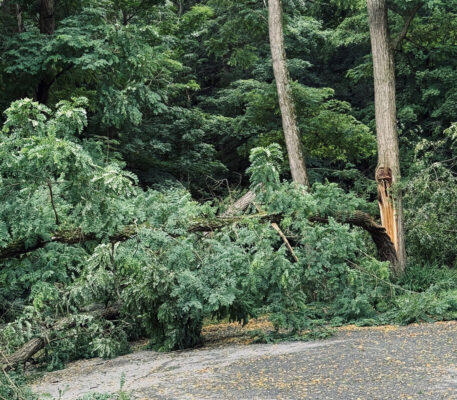
July 4th weekend, record-breaking heat in the New York area. An hour north of the city, where I live, a wicked thunderstorm kicks in. Through my windows I watch trees in a violent dance, whipped this way and that by the wind. I ready myself for the anticipated power outage. All it takes is one tree to topple over a power line.
When I relocated from the city with my husband and young daughter back in the ’90s, there was a certain charm to being without electricity for a few hours, maybe even a day. The refrigerator did not hum. The phone — those were pre-cell-phone days — did not ring. Generators were few and far between.
In the years between then and now, rainstorms became more fierce, and feeling like a pioneer lost its charm. The wind unsettles me, stirs memories of Hurricane Irene (a year before the infamous Hurricane Sandy in 2012) and filling the bathtub with buckets of water from a nearby pond. Can’t flush a toilet without water.
Backup power is a beautiful thing. No need to go to my local health club to take a shower. No concerns about keeping my home heated during a blizzard.
No Internet? An inconvenience I can live with. Personal hotspots don’t always work, but cellular service gets me all I need.
For a time.
More important to the story here is how backup power, grateful as I am to have it during an emergency, is nothing if not a reminder of what is out of our control. We live with expectations. We get angry when we’re inconvenienced. We measure time in nanoseconds, a byproduct of the technology that rules our lives. Even during those times when we’re off the grid by choice or circumstance, it takes some time to reverse the curse — stop doomscrolling on computers or checking emails too many times to count or reacting like a Pavlov dog to the sound of a text. . . .
To continue reading click here: Medium